Advanced Leak Detection Techniques for Oil & Gas Pipelines
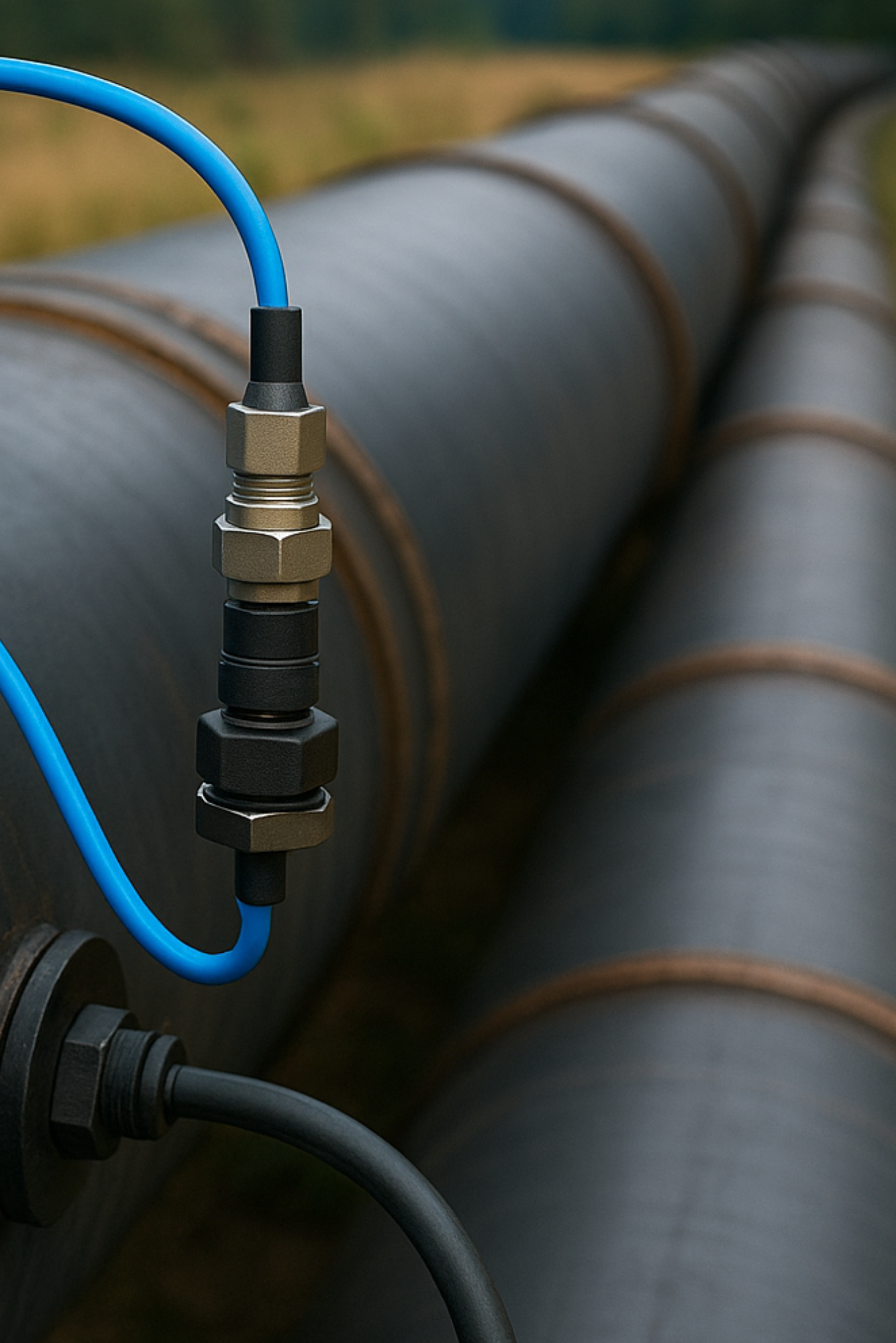
In the oil and gas industry, leak detection isn’t just about operational performance—it’s about safety, environmental stewardship, and financial responsibility. Even minor pipeline leaks can lead to catastrophic consequences: product loss, environmental contamination, regulatory fines, and reputational damage. As pipeline infrastructure ages and global scrutiny on energy sustainability increases, deploying advanced leak detection techniques has never been more critical.
At AXIA, we believe leak detection must evolve alongside the complexity of the pipeline systems it protects. Below, we explore the most advanced techniques reshaping the future of pipeline integrity.
1. Fiber Optic Sensing (Distributed Sensing Technologies)
Fiber optic cables laid alongside or embedded in pipelines serve as powerful leak detection tools. These systems use Distributed Temperature Sensing (DTS) and Distributed Acoustic Sensing (DAS) to detect thermal anomalies and sound patterns associated with leaks.
When a leak occurs, the escaping fluid or gas changes the local temperature or produces distinct vibrations. These changes are picked up in real time, with high spatial accuracy—sometimes pinpointing leak locations to within a few meters. This technique is especially valuable for long-distance and remote pipelines.
2. Acoustic Emission Monitoring
Leaks often produce sound, especially when pressurized fluid escapes into the environment. Acoustic sensors installed along the pipeline can detect these emissions and differentiate between natural background noise and leak-specific frequencies.
Combined with AI-based sound recognition models, acoustic monitoring offers rapid detection and can be used both internally (via in-line tools) or externally (mounted on pipeline surfaces or nearby structures).
3. Negative Pressure Wave Detection
This method detects leaks by sensing the pressure waves generated when fluid escapes. The negative pressure wave travels along the pipeline in both directions and is picked up by sensors at various points. The system calculates the leak’s location based on the time difference between wave detections.
Though highly effective for rapid leak detection, this method is best used in high-pressure pipelines and requires well-calibrated infrastructure.
4. Mass/Volume Balance Systems
By comparing the volume of product entering the pipeline to the volume exiting, operators can infer if a leak has occurred. While this is a traditional method, modern systems now use advanced algorithms and real-time flow measurement devices to enhance precision and reduce false alarms.
While slower than other methods, mass/volume balance systems are valuable for continuous monitoring and verification.
5. Aerial and Satellite Remote Sensing
Advanced aerial surveys using thermal imaging, LIDAR, or hyperspectral sensors mounted on drones or satellites can detect leaks from above. These systems are excellent for visualizing gas plumes or hydrocarbon residues, particularly in hard-to-reach or environmentally sensitive areas.
Newer models powered by AI can differentiate between pipeline leaks and environmental anomalies with increasing accuracy.
Looking Forward
Combining multiple leak detection techniques—known as a layered or hybrid approach—offers the most robust protection. At AXIA, we integrate advanced sensor networks with real-time data analytics, AI-driven pattern recognition, and secure cloud platforms to deliver actionable insights and instant alerts.
The result? Safer operations, fewer environmental incidents, and lower operational risk.
Leak detection isn’t just a regulatory checkbox—it’s a smart investment in the integrity of your pipeline and
the trust of your stakeholders.